The Beginnings: A Beautiful Move by Fate.
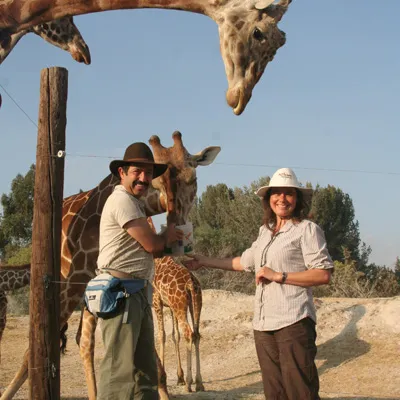
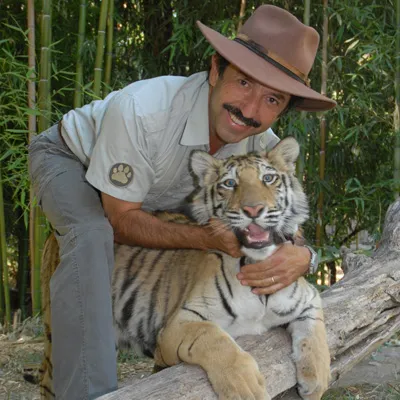
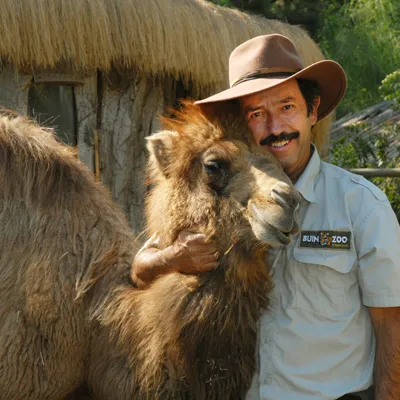
In 1985, veterinary doctor Ignacio Idalsoaga owned a pig farm in a rural area of Buin at the time. The inhabitants of the sector used to bring him injured wild animals that they found for him to be treated and then released. Many of these animals, although healed of their wounds, were unable to return to nature because they were unable to survive (their physical condition prevented them from hunting and feeding, or eventually plucking from possible predators). This was to condemn them to certain death). Faced with this situation, Dr. Ignacio Idalsoaga, together with his family, began to build cages to keep these animals in captivity, generating a small sample of specimens that people in the sector began to visit. This is how the facilities were filled with abandoned pets and injured animals carried by private individuals. Without looking for it or wanting it, the first shelter for wild animals in the country was created.
This is how an important focus of tourist attraction is formed in the area, since in addition to this animal show and the pig business, the Idalsoaga family also had the Montserrat breeding farm for San Bernardo dogs.
“The Parque de Asís” is born
In 1989, 4 years after receiving damaged animals, the number had increased exponentially and it became necessary to find a funding method both for their treatment and for their food. In March of this year, the “Parque de Asís” was born, the first cemetery for pets in the country. So innovative was the idea, that after 12 months of operation it had no space to receive more pets. This made him well known at the national level, precisely because he was unique.
In July 1990, the park was recognized by the Chilean Agricultural and Livestock Service (SAG), allowing it to exist legally as a zoo. This allowed him to receive more exotic animals, and little by little the zoo concept began to be installed in “El”. Parque de Asís
In 1995, the first meeting of hatcheries organized by the SAG took place. That meeting would mark the fate of Dr. Ignacio Idalsoaga and his family, since there he learned from figures from the state entity that “El Parque de Asís” was the largest private zoo in the country (again, without having looked for it).
Buin Zoo Break the shell and the “snow ball” begins
1998 was a key year in the history of the park, as the Latin American zoo meeting that Dr. Idalsoaga decided to attend was held at Africam Safari (Puebla, Mexico). Among 14 competing parks, “El Parque de Asís” won the award for the zoo with the highest projection in Latin America, generating the definitive takeoff. In addition to the prize, the meeting shows that the message being delivered of the “humanization” of pets was not the right one: What had to be done was to educate about animals, and not to make them look human.
So a year later, in 1999, “Buin Zoo” was created as such, “El Parque de Asís” being, from now on, only the name of the pet cemetery.
From that year onward, a very rapid growth Buin Zoo began, which today has transformed it into the largest and most modern zoo in Chile. In 2001, for example, the largest Aquarium in the country was inaugurated inside; in 2004 the Hospital Clínico Veterinario S.O.S.; and in 2007 it became the first zoo in South America and the second in the world to obtain the international quality certification ISO 9001:2000, among many other achievements and distinctions. Added to this is the inauguration in 2011 of “Masai Mara, The African Savannah”, the most modern enclosure Buin Zoo where all the animals of the African meadow live together as in their natural habitat, and in 2013 the reconstruction of the S.O.S. Veterinary Hospital thanks to an alliance with the Andrés Bello University of Chile, giving the park the largest place in the country for the care of domestic pets and exotic animals. Among its latest milestones, there is also the arrival Buin Zoo of the first and only rhinoceroses present in Chile in October 2013, taking an important leap and rising to the level of only a few zoos that have these animals on the continent.
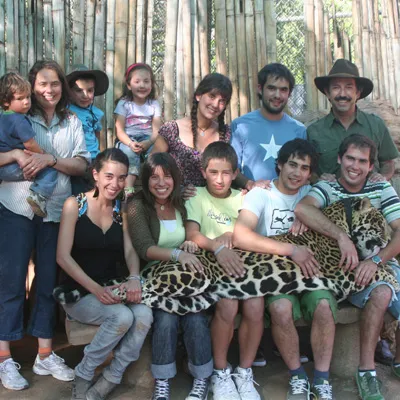
Time goes by and what began as a history of family entrepreneurship today is an absolutely consolidated project, a leader in the entertainment and education industry in Chile, led by Ignacio Idalsoaga, his wife Paula Ferrer and their 10 children: María José, Pablo, Francisco Javier, Esteban, Estíbaliz, Montserrat, Lorenzo, Diego, Magdalena and Joaquín.