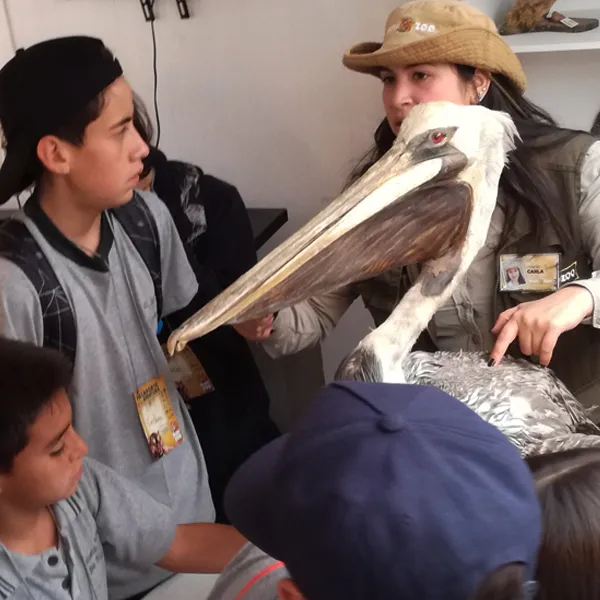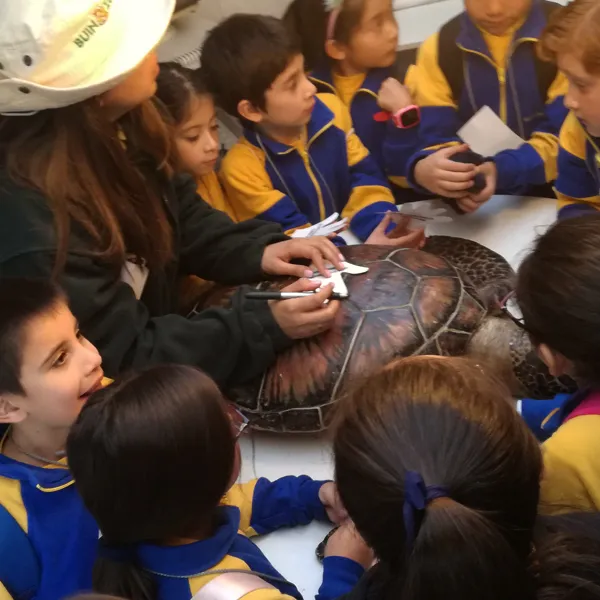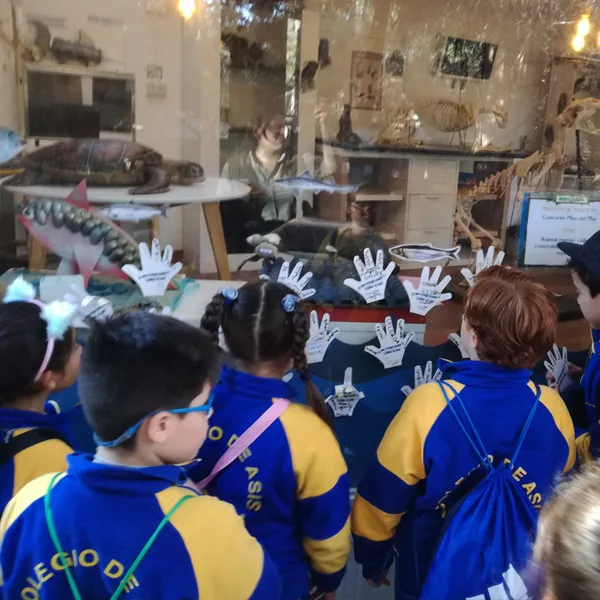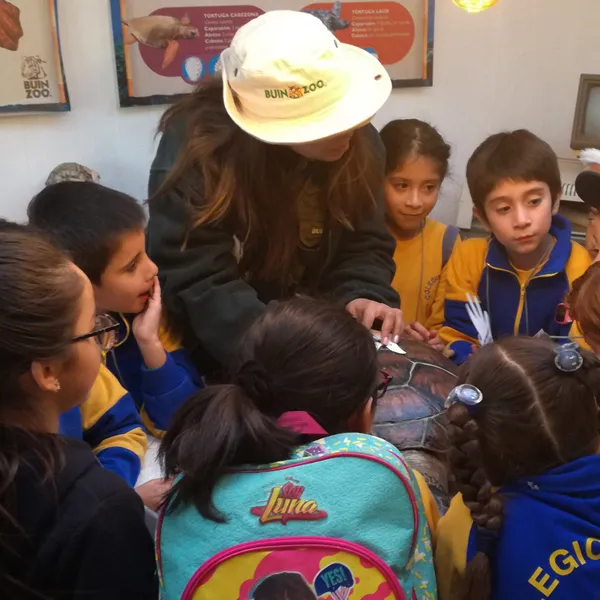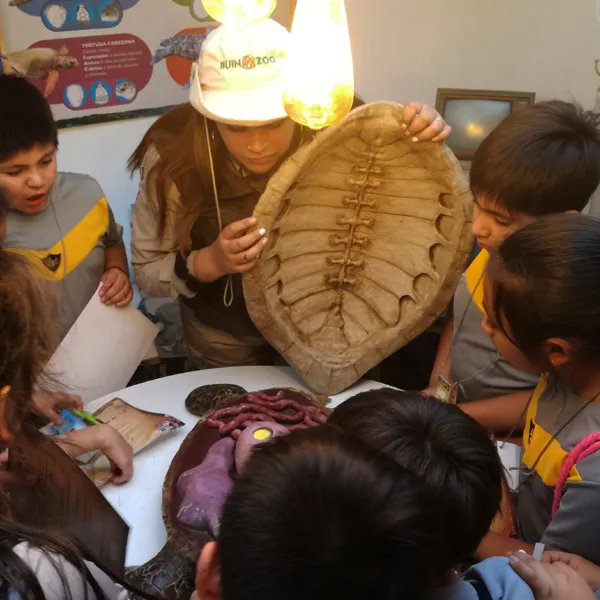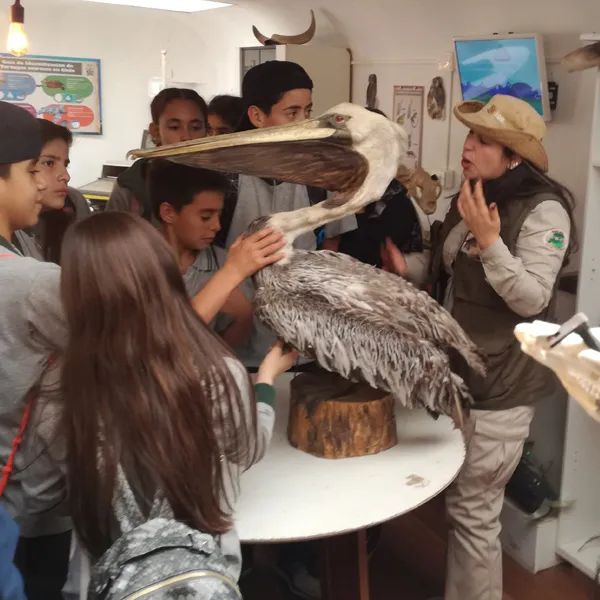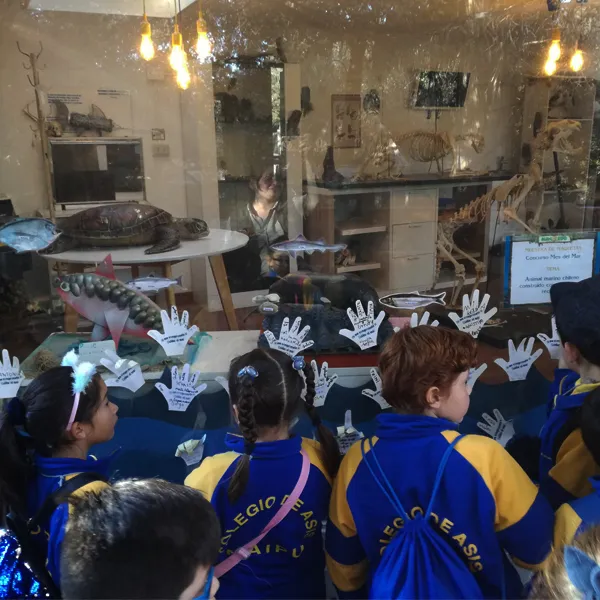
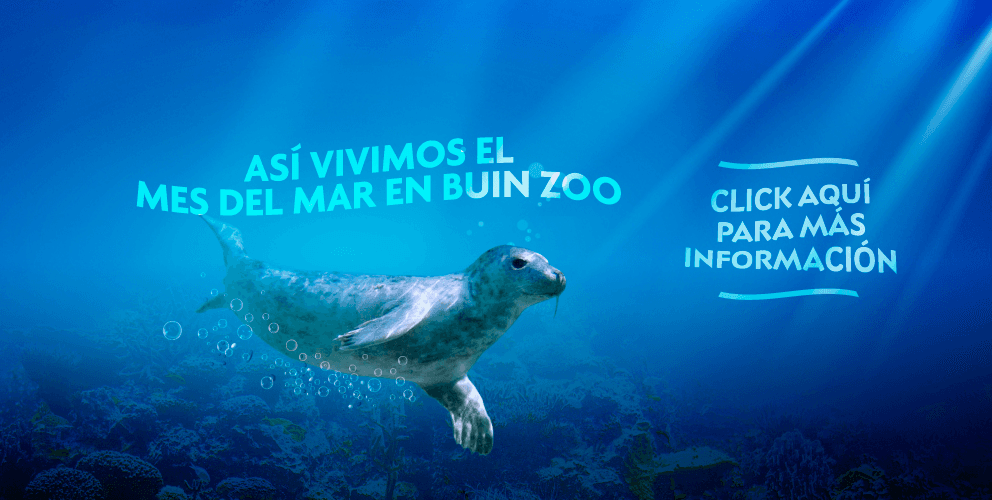
With entertaining activities enjoyed by hundreds of visitors and students from different schools, we closed the month of the sea in. Buin Zoo
With the educational visits prepared by our education department, children from several schools in the country were able to learn everything about the marine fauna of our planet, being surprised by the most diverse species in the marine world and learning about the marine biodiversity of Chile and the world, as well as learning about the environmental threats that cover our coasts.
If you couldn’t come during the month of May, don’t worry! , since you can come all year round to meet our new sea lions, learn about the behaviors of penguins and seals in our educational live animal show of. Buin Marino
The sea covers two-thirds of our planet, providing us with food, energy and other treasures. But its fantastic resources are in danger of disappearing. What are the worst threats?
- Overfishing
Fish and shellfish are a healthy source of food. Around the world, especially in developing countries, many people rely on this protein source to survive. Formerly, mankind fished only as much as nature could give it. But that balance has disappeared.
The major fishing countries were China, Indonesia and the United States in 2015. UU. 80% of the world’s fish and seafood supply has been trapped by 23 countries, most of them industrialized.
Fish farming was for a long time a solution to this problem. But it has been found that it actually worsens it. Paradoxically, industrial fish farming, for example, in large facilities called fish farms, requires enormous quantities of fish and shellfish to feed captive fish. In addition, it dirties the waters due to fish excrement and the medicines used for their breeding.
What could help in this case would be rigorous fishing quotas and better management of fishery resources. If left to rest, fish stocks can recover. And of course: consumers should keep in mind that awareness about the quantity of fish and the species they eat influences that they do not disappear so quickly.
- Acidification of the seas
CO2 emissions have quadrupled since the start of the industrial era. However, the concentration of CO2 in the atmosphere increased by only 40%, as the oceans absorb this toxic gas, which dissolves in water. In this way, the sea slows down the speed of climate change. But that also has its price.
When CO2 dissolves, carbonic acid is produced, meaning that seawater becomes acidic because its pH or hydrogen concentration drops. In 1870, the pH of seawater was 8.2. Currently, it is 8.1, and it is expected that by 2100 it will be reduced to 7.7. This means that the amount of acid in water will have increased by 150% by 2100. Many marine animals, especially smaller ones, will not be able to survive.
- A future of lead
The seas not only store CO2, but also heat. According to estimates, they absorb 93% of the heat produced by CO2 emissions. This translates into an increase in water temperature. Between 1900 and 2008, the planet’s sea surface temperature increased by an average of 0.62 degrees Celsius. In some areas of the China Sea, up to 2.1 degrees Celsius. This represents a big problem for corals, animals that have a calcareous skeleton, inside which algae (protozoa) that live on the basis of photosynthesis nest. If the water is very hot, the corals expel their algae and then die. This process is called “coral bleaching”. Already 75% of Australia’s Great Barrier Reef has disappeared under these circumstances. The only thing that could solve keeping the oceans at a normal temperature is the reduction of CO2 emissions worldwide. In addition, research is being done on how to breed corals that can withstand higher temperatures.
- Plastic, garbage and more plastic
For a long time, the world’s seas received the countless tons of garbage from shipping, tourist cruises and coastal cities. And although humanity’s awareness of this big problem has improved a bit, the oceans are still receiving enormous amounts of waste.
Ocean currents carry with them five giant swirls of millions of pieces of plastic and other waste. They measure approximately 700,000 to 15 million square kilometers.
99% of this waste, however, is not trapped by currents, but rather ends up on the coast and endangers the lives of seabirds, sea turtles and other animals. A large part of marine litter dissolves in microparticles, which are deposited on the bottom of the sea, or on the ice of the seas in the Arctic and Antarctic.
Added to this are nitrate and phosphate from animal farms, which flow into the sea through rivers and are food for algae that then die and are dissolved by bacteria. This reduces the oxygen content in the sea, forming “dead zones” where nothing can develop or grow anymore.
Another major problem is industrial waste, with which dangerous chemical substances and metals such as lead and mercury reach the oceans, becoming part of the meat of whales and sharks through the food chain.
- Marine wealth: Mangano and other metals
As if that weren’t enough, another act of human piracy awaits the oceans. In the deep sea lie mineral riches such as manganese and iron and manganese hydroxide rocks, with which metal alloys can be made, mainly, used in the production of stainless steel. According to estimates, there are more than 7 billion tons of manganese on the seabed, more than on land. Many countries have already submitted claims to marine areas in order to start exploiting them. The world’s seas are also home to other valuable metals, such as nickel, thallium and rare earths.
Underwater mining could not only cause species to mutate, but also seriously endanger the sensitive ecosystem of the oceans. The only thing that could stop this development are widespread prohibitions or, at least, stricter laws that regulate deep-sea mining.
Gallery